How culture, connection, and shared ownership shape the employee experience at Abel Design Group and influence the spaces we create for others.
A sense of place is often discussed through the lens of design: the materials, details, experiences, and decisions that give a space its identity. But before a design team can create that feeling for someone else, there is value in understanding what creates it within their own environment.
For Abel Design Group, that begins with its people.
Insights by Design explores the perspectives, experiences, and ideas shaping the way Abel Design Group approaches design.
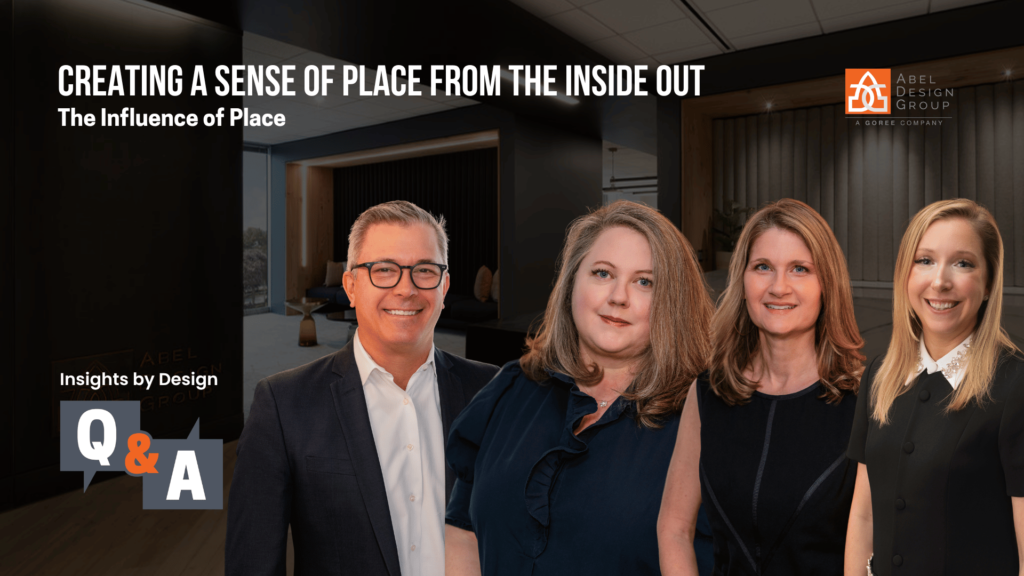
In this edition, we sit down with Managing Principal Jeffrey Abel and Principals Kathy Chauvin, Laura Evans, and Rachel Koehring to explore a sense of place from the inside out. Together, they reflect on the culture ADG has built, how it has evolved alongside the firm’s growth, and how creating connection and belonging internally ultimately influences the spaces the team creates for clients.
Understanding what makes Abel Design Group feel distinctly like ADG starts with understanding the culture the firm set out to create from the beginning.
Building a Culture People Can Make Their Own
When Jeffrey founded Abel Design Group, he wasn’t interested in creating a firm where every idea or decision had to carry his personal stamp. Instead, part of the vision was creating a place where talented people could contribute their own perspectives and have a sense of ownership in what the firm became.
That philosophy has remained important as ADG has grown. Jeffrey often describes the firm as having many fingerprints on it. Rather than one person defining what ADG should be, the people who have joined along the way have each helped shape it.
Today, that shared ownership shows up differently depending on who you ask. Kathy describes ADG as a family. People care about one another, work together, have each other’s backs, and genuinely enjoy spending time together. For Laura, the firm’s history and everything the team has built together create a foundation that new employees can continue to shape.
Rachel sees another quality that makes ADG distinct: the firm is confident and thoughtful without being cookie-cutter. The work is deeply design-driven, but it remains grounded in intention and an understanding of what each client is trying to accomplish. That combination of creativity, intentionality, and genuine partnership is as much a part of the firm’s identity as the work itself.
Giving people room to contribute to that identity requires trust. People are brought into the firm for their expertise and perspective, and part of maintaining the culture is allowing them to do what they were hired to do while adding their own fingerprint to what ADG becomes next.
Growing Without Becoming the Same
With offices in Houston, Austin, Denver, and Atlanta, maintaining a shared identity does not mean making every ADG office feel identical.
Rachel noticed that distinction almost immediately after joining the firm. Each office has a personality shaped by its people, clients, and community, while a shared commitment to thoughtful design, intentional decision-making, and strong client relationships keeps them connected.
Maintaining that connection becomes more intentional as the firm grows. Kathy points to leadership visits, onboarding in Houston, mentorship, and cross-office collaboration as ways ADG continues to reinforce its culture. Together, those efforts help the firm maintain a shared identity while preserving what makes each location distinct.
That individuality also comes through in the traditions each office creates. Laura points to a longstanding Austin tradition: team members mark their heights along a wall when they join the office. What might look like a playful design element to someone visiting carries a history for the team and has become a small way of welcoming new people into it.
It’s a simple example of what gives a place meaning: the environment provides the setting, but the people and shared experiences create the connection.
The Moments That Give a Place Meaning
A sense of place is shaped by more than the physical environment. For ADG’s leadership, many of the things that make the firm feel like home come from the relationships, traditions, and shared experiences built over time.
Kathy describes that connection as experiencing both sides of working together: digging in as a team to meet a difficult deadline and then turning around and having fun together. Rachel points to traditions like bADGer Lake Day, Squads, community service, and office celebrations as opportunities to strengthen those relationships beyond day-to-day project work.
That sense of connection also shows up in smaller moments. Laura recalls the openness employees experience with leadership, including Jeffrey taking new hires to dinner during onboarding and creating an opportunity for them to get to know him and ask questions directly.
Whether through a longstanding tradition, a shared experience, or a simple conversation, those moments help create an environment where people feel known, welcomed, and part of something larger than their individual role.
Connection Has to Be Intentional
As a firm grows across cities, disciplines, and project types, connection becomes increasingly intentional.
One of the most consistent ways ADG brings everyone together is First Thursday of the Month (FTOTM), the firm’s monthly all-company meeting. Kathy points to the rotating host office as an opportunity for employees to hear from people across ADG, learn about their project work, and see how different teams connect and engage within their communities.
For Laura, those meetings also build familiarity across offices. Beyond learning what other teams are working on, FTOTM gives employees opportunities to learn from one another and better understand the expertise that exists across the firm. That familiarity creates a level of comfort that makes it easier to reach across offices when a question, challenge, or opportunity for collaboration arises.
That connection extends beyond FTOTM through cross-office project work, mentorship, committees, and shared experiences. Jeffrey describes the goal as creating “connective tissue” between offices, strengthening relationships that allow ADG to operate as one firm while still preserving the individuality of each location.
As Rachel notes, the larger goal is helping people understand where the firm is going, what it values, and how their individual contributions fit into something bigger than their immediate team or office.
Good Work Starts on the Inside
For Laura, culture and business are not separate conversations. ADG is ultimately a business, and everyone is there to do great work, serve clients, and contribute to the firm’s success. Creating an environment where people have fun, enjoy the people around them, and want to come to work supports that goal rather than competing with it.
She sees the two almost as building blocks. Before a team can consistently create great work externally, the right people and foundation have to exist internally.
Jeffrey draws a similar connection between the way people experience ADG and the work they ultimately produce. When employees feel welcomed, cared for, and supported, they are better positioned to do their best work. That experience carries forward into the way teams collaborate, serve clients, and ultimately create better projects.
Kathy sees that connection in the design process itself. When employees understand what makes an environment work for them, that awareness becomes instinctual. They recognize the value of connection and belonging and want to build those qualities into the spaces they create so their clients’ teams can experience them, too.
Rachel connects that same idea to the behaviors thoughtful design requires: curiosity, empathy, collaboration, and a willingness to challenge the expected. When employees feel comfortable contributing ideas and solving problems together internally, they are better positioned to understand a client’s goals, identity, and story and translate them into a meaningful environment.
Protecting What Matters While Continuing to Evolve
For Jeffrey, continuing to evolve also means ensuring the firm never becomes defined by one person. He often describes ADG as having many fingerprints on it, each representing the people who have contributed their ideas, expertise, and perspectives along the way. As the firm grows, preserving that sense of shared ownership means continuing to trust people to make their mark on what ADG becomes next.
It’s an idea Laura also sees as essential to the firm’s future. Protecting the history and key pieces of ADG’s culture matters, but so does leaving room for new people to take ownership and add something of their own.
Together, those perspectives reinforce many of the ideas Kathy and Rachel see as important to ADG’s future: maintaining a culture of excellence while continuing to create an environment where people feel welcomed, supported, connected, and empowered to contribute.
Ultimately, Jeffrey sums up the experience ADG hopes to create in one word: welcome. When people feel welcomed and invested in the place they are part of, they are better positioned to do their best work and extend that same level of thought and care into the places they create for others.
In that way, creating a sense of place truly begins from the inside out.