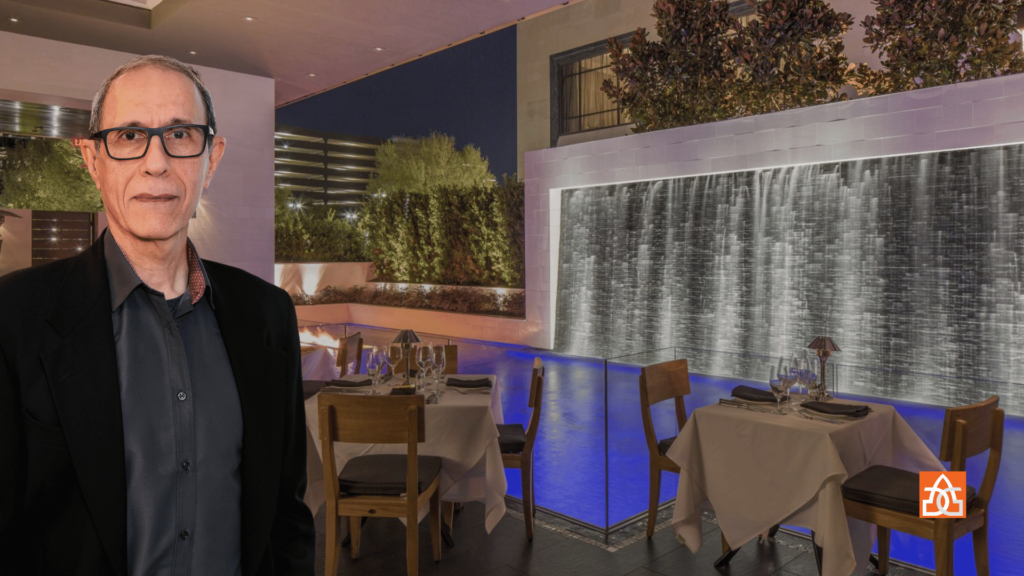
Associate Principal Darayus Kolah Retires After A Storied, Multi-Decade Career and More than 14 years with Abel Design Group
A Reflection on His Career and Lasting Impact
“Every line means something” is a phrase that Associate Principal Darayus Kolah repeated often throughout his career, and one that ultimately became representative of both his design philosophy and his impact on the firm and industry.
After more than 14 years with Abel Design Group and decades of experience in the architecture and design industry, Darayus is stepping into retirement, leaving behind a lasting impact on the firm, its people, and the work that has helped shape Houston’s hospitality and restaurant landscape.
Known for his thoughtful and detailed approach to design, technical precision, and mentorship within the firm, Darayus played an integral role in expanding Abel Design Group’s capabilities over the years, helping guide the firm into high-end hospitality, restaurant, and retail environments while elevating the level of detail and execution across projects. In a recent conversation reflecting on his career and retirement, Darayus and Managing Principal Jeffrey Abel discussed the evolution of the firm, the philosophy behind Darayus’ work, and the legacy he leaves behind as he closes this chapter.
“When Darayus joined the firm, one of the things he brought with him was a completely different level of design and detailing,” Jeffrey said. “The restaurants, the hospitality work, the quality of projects we were able to pursue, that expanded because of him.”
Their professional relationship began long before Darayus officially joined the firm. Early on, while working independently, Darayus rented space from Jeffrey, with the two eventually collaborating on projects together. Over time, that collaboration evolved into a long-term partnership that helped shape the firm’s growth and expansion into hospitality-focused work.
Darayus reflected on that growth as one of the things he is most proud of during his time at Abel Design Group. Coming from a background rooted in high-end restaurant and retail design, he helped introduce a new category of work to the firm while also helping younger designers better understand the level of precision and thoughtfulness required behind every drawing and detail.
“I like to think that one of my contributions was helping expand the breadth of work we do,” Darayus said. “Not just restaurants, but the level of work itself. And I think my attention to detail helped create more awareness around what’s required to properly execute a project.”
That attention to detail quickly became a recurring theme throughout the conversation.
For Darayus, architecture has always been about more than creating something visually compelling. It is about understanding how something will function, how it will be built, how it will operate day-to-day, and how people will ultimately experience it.
“You can’t design a restaurant if you don’t understand how a restaurant operates,” he explained. “You have to understand how people move through the space, how food is delivered, how service functions, and how everything works together operationally. Once you understand that, the design starts to fall into place.”
That operational mindset and philosophy extended far beyond hospitality design. Throughout his career, Darayus became known for thinking several steps ahead, often visualizing how a detail would actually be constructed long before a project reached the field.
“Every line means something,” Jeffrey said while reflecting on Darayus’ approach to architecture and detailing. “If you draw something, make sure it’s appropriate. Darayus always pushed people to think through every decision and understand what they were actually putting on paper.”
Darayus emphasized that level of intentionality throughout his career, often encouraging younger team members to slow down, ask questions, and fully understand how something worked rather than simply copying a solution.
“When I review drawings, I don’t like to just draw a detail and hand it over,” he said. “I ask questions instead. Things like, how is this going to attach? How is this going to work? Is this the right product? I want people to think through what they’re drawing, because that’s how you really learn.”
That mindset became a defining part of his mentorship approach within the office.
Over the years, Darayus became a trusted resource for younger designers across Abel Design Group’s offices, frequently helping team members work through technical challenges, detailing questions, and design decisions. Whether walking someone through a construction detail, pulling product binders from the office library, or hopping on a call with another office, he approached mentorship with patience and openness.
“I always tell the staff, ask me 100 times if you need to,” Darayus said. “Don’t be afraid to ask questions. Everyone starts somewhere.”
Jeffrey described that consistency and willingness to help others as one of Darayus’ most admirable qualities throughout his time at the firm.
“There’s a lot of action behind the way Darayus works,” Jeffrey said. “He always showed up, always worked hard, and was always available to help people. He led by example without needing to say it out loud.”
Behind the technical side of architecture, Darayus also stressed the importance of listening, both to clients and to the people ultimately experiencing a space.
“First and foremost, listen to what the client wants,” he said. “Give them what they asked for, but also give them another option to show them what it could be. A lot of times, clients don’t know all the possibilities yet, so part of our role is helping expand that vision while still respecting their goals and budget.”
That balance between creativity, practicality, and collaboration became central to his approach throughout his career and ultimately helped shape many of the relationships and projects that followed him to Abel Design Group over the years.
Jeffrey noted that Darayus’ disciplined approach to design and forward-thinking mindset is what earned the trust of so many clients and collaborators.
“The reason clients followed Darayus throughout his career was because of his pursuit of clarity and perfection,” Jeffrey said. “He was always looking around the corner, thinking ahead, and trying to solve problems before they became problems.”
As the conversation shifted toward retirement, Darayus reflected not only on the projects and experience that shaped his career, but also on the people and the culture that defined his time with the firm.
“I’ll miss being here,” he admitted. “But I don’t see myself completely disconnecting from architecture and design. I still want to stay involved, help where I can, answer questions, and continue being a resource.”
For Jeffrey, Darayus’s impact on the firm is difficult to measure simply through projects alone.
“You’re a massive branch in our trees of success,” Jeffrey told him during the conversation. “Without you, we would not be where we are today.”
As he closes this chapter, Darayus encourages younger designers to continue pushing themselves to think critically, stay curious, and develop their own design voice rather than simply following trends or repeating what has already been done.
“Create your own style and create your own language,” he said. “Don’t just follow what others have done before you. Design for today, learn from everything around you, and strive to be your best.”
While retirement marks the close of one chapter, Darayus’ influence on Abel Design Group, through the projects, standards, people, and culture, will continue to shape the firm for decades to come.