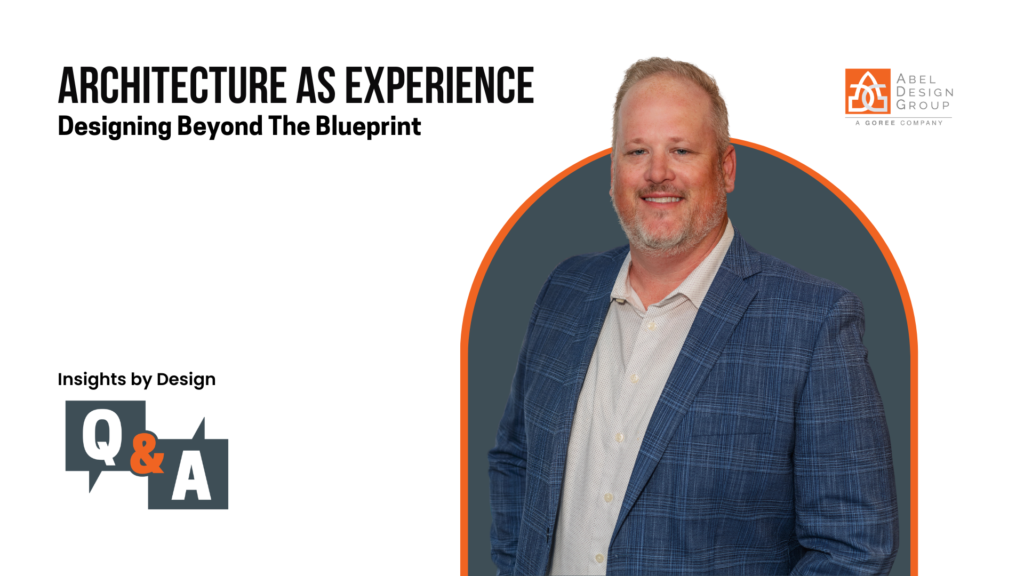
HOUSTON, TX, February 26, 2026 —
Architecture is the disciplined integration of ambition and reality. For Senior Associate, Taylor Alford, this belief shapes every project from concept through completion. As his career has evolved, so has his understanding of architecture, not as an abstract exercise, but as a deliberate synthesis of purpose, performance, and human experience.
In Houston’s dynamic climate and ever-evolving regulatory environment, Taylor approaches design as both pragmatic and poetic. His work reflects a commitment to buildings that respond to context, endure over time, and elevate everyday life through clarity, proportion, and thoughtful material expression.
In this Insights by Design Q&A, Taylor shares how constraints sharpen design thinking, why collaboration is essential to carrying intent beyond the drawings, and how architecture can balance resilience, flexibility, and emotional resonance. His perspective reveals a disciplined yet generous approach to shaping spaces that perform today while adapting to tomorrow.
As your career has evolved, how have your experiences shaped the way you approach architecture, collaboration, and project delivery, especially when balancing design intent with real-world constraints?
Taylor:
Over time, I have learned that constraints do not diminish strong design; it is clarified by them. Early in my career, I was focused on form and conceptual purity. Today, I see architecture as a synthesis of ambition and reality. Budget, schedule, climate, regulatory frameworks, and constructability are not external pressures; they are design inputs.
Operating in Houston reinforces this mindset. We design in a climate defined by heat, humidity, flooding risk, and intense storms, which demands technical rigor and resilience from the outset. As a boutique, design-driven practice, we remain deeply involved from concept through construction, allowing us to carry the design intent forward while adapting as conditions evolve.
Collaboration, early and often, is what protects both the idea and the outcome.
As an architect, how do you think about space, structure, and user experience beyond what is captured on the drawing?
Taylor: Drawings communicate geometry, but architecture is ultimately about experience, light, material, proportion, sound, movement, and even temperature. Early in the process, I consider how a person arrives, where their eye is drawn, how daylight shifts throughout the day, and how the building breathes.
Structure is not separate from architecture; it is formative. Exploring structural systems early influences rhythm, scale, and material expression. Circulation becomes spatial storytelling, arrival moments create clarity and anticipation, while changes in light, ceiling height, and materials signal transition. When these elements are integrated early, they elevate the experience rather than feeling additive.
Your portfolio encompasses a multitude of market sectors. What architectural principles remain consistent for you, regardless of typology or client?
Taylor: Clarity, proportion, and authenticity remain constant. Regardless of typology, commercial, education, or restaurant, we aim for buildings that are legible and purposeful. Circulation should feel intuitive, materials should be honest, and details should be resolved.
Contextual response is equally important. In Houston, context can mean urban infill conditions, suburban expansion, or post-industrial sites. Each project deserves an architectural response that feels rooted rather than generic.
While programs change, the commitment to craft, performance, and meaningful user experience does not.
Beyond the blueprint, what behind-the-scenes decisions and real-world constraints most influence how a building performs and endures?
Taylor: Envelope performance, detailing at transitions, and systems integration often have the greatest long-term impact. In our climate, vapor barriers, shading strategies, and material durability are critical to longevity.
Maintenance and operational efficiency also shape design decisions. A beautiful building that is difficult to maintain will not age well. Hidden coordination between structure, mechanical systems, lighting, and acoustics ultimately determines how a space feels.
When these systems are integrated thoughtfully, the architecture appears effortless.
In experience-driven environments, how do you balance operational efficiency with architectural character?
Taylor: We begin by thoroughly understanding operations. Flow diagrams, adjacencies, and service requirements inform the spatial framework. Once that framework is established, architectural character is layered through light, material, and proportion.
Performance and expression should reinforce one another. Shading devices can become defining architectural features, and structural rhythm can create spatial identity. When operational logic is clear, architectural expression feels inevitable rather than forced.
Education and community-focused projects must remain flexible over time. How do you design architecture that adapts while still feeling intentional on day one?
Taylor: Flexibility comes from disciplined planning. Clear structural grids, thoughtful service distribution, and adaptable partitions allow spaces to evolve. We aim for architecture with a distinct identity while supporting evolving uses over time.
Durability is equally critical. In Houston’s climate, materials must withstand humidity and heavy use. At the same time, architecture should never feel provisional simply because it is adaptable. Intentional geometry and material restraint create longevity in both performance and perception.
Carrying intent from concept through construction requires strong collaboration. How do you protect design integrity across teams?
Taylor: Transparency and trust are foundational. We involve consultants early so that civil, structural, and mechanical strategies are integrated rather than layered on later. Regular design reviews maintain alignment across disciplines.
With contractors, we approach the process as a true collaboration. Clear documentation, early detailing, and active site engagement create shared clarity around intent and execution. That same clarity extends to our clients; when they understand the reasoning behind decisions and how these decisions support performance, budget, and long-term value, they become advocates for the design as the project evolves.
Looking ahead, how do you see architecture evolving as expectations for flexibility, experience, and performance continue to rise?
Taylor: Expectations are rising across sustainability, wellness, adaptability, and resilience. In Houston, resilience is not optional; architecture must address flooding risk, energy performance, and long-term durability as baseline requirements.
At the same time, people increasingly seek spaces that foster connection and identity. The future lies in integrating performance and expressive design, buildings that are environmentally responsible, operationally efficient, and emotionally resonant. For boutique firms, agility and close collaboration position us to respond thoughtfully to that evolving landscape.